
Husky vs Malamute: how to tell them apart
A Malamute is the bigger, heavier dog: about 75 to 85 lb against 35 to 60 lb for a Siberian Husky. Malamutes have brown eyes and a plumed tail carried over the back, while Huskies can have blue or odd eyes and carry the tail in a low sickle curve.
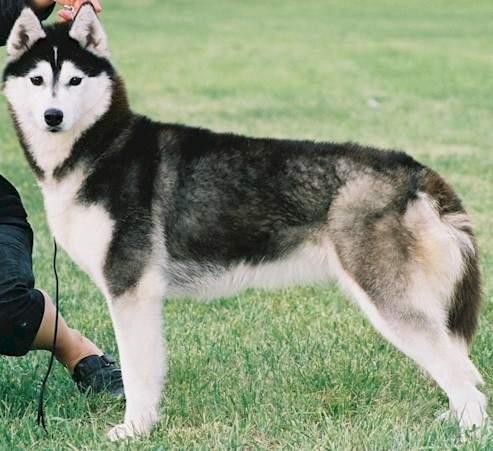
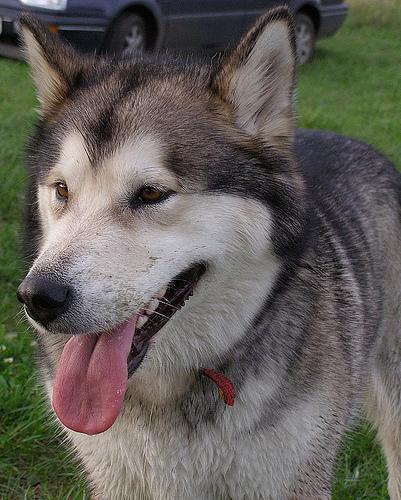
Not sure which one your dog is? Upload a photo. Our AI compares it with 120 breeds, including both of these, and shows the 3 closest matches in about ten seconds.
Check my dog's breedHusky vs Malamute: the 5 differences to look for
- Size. A male Malamute stands about 25 inches and weighs about 85 lb. A male Husky stands 21 to 23.5 inches and weighs 45 to 60 lb. Side by side, the Malamute looks a size up in every direction.
- Eyes. Huskies can have brown eyes, blue eyes, one of each, or eyes that mix both colours. The Malamute standard asks for brown eyes and treats blue eyes as a disqualifying fault. A blue-eyed dog is very likely a Husky or a mix.
- Tail. A Malamute carries its bushy tail over the back like a waving plume. A Husky's tail is a fox-like brush that curls up in a sickle when the dog is alert and trails down when it relaxes.
- Build. The Malamute is heavy-boned, deep-chested and built to haul heavy loads over long distances. The Husky is lighter and leaner, built to pull light loads fast.
- Ears and head. Husky ears are set high and close together. Malamute ears look small for the broad head and sit wide apart on the outer edges of the skull.
Size, weight and lifespan
| Siberian Husky | Alaskan Malamute | |
|---|---|---|
| Height at the shoulder | 20 to 23.5 in | 23 to 25 in |
| Weight | 35 to 60 lb | 75 to 85 lb |
| Life expectancy | 12 to 14 years | 10 to 14 years |
Ranges cover males and females together. Source: the AKC breed standards and breed pages.
Temperament and care, side by side
The American Kennel Club rates every breed from 1 to 5 on the same traits. Highlighted cells show where the two breeds differ by 2 points or more.
| AKC rating (1 to 5) | Siberian Husky | Alaskan Malamute |
|---|---|---|
| Energy | 5 | 4 |
| Shedding | 4 | 3 |
| Grooming | 2 | 3 |
| Good with young kids | 5 | 3 |
| Good with other dogs | 5 | 3 |
| Barking | 5 | 3 |
| Easy to train | 3 | 5 |
| Needs mental work | 4 | 3 |
| Adapts to change | 4 | 3 |
| Playful | 5 | 3 |
| Affectionate with family | 5 | 3 |
| Open to strangers | 5 | 3 |
| Watchdog | 1 | 4 |
| Drooling | 1 | 1 |
Which one is right for you?
Pick a Husky if you want a lighter, very social dog that loves company, people and other dogs. AKC rates it 5 out of 5 with young children and with other dogs, and also 5 out of 5 for barking, which in a Husky usually means howling and talking.
Pick a Malamute if you have room for a bigger, stronger dog and time to train it. AKC rates it higher for trainability (5 against 3) and as a watchdog, but lower with young children and other dogs (3 against 5). Both need hard daily exercise and cool weather suits them best.
Still choosing a breed? The dog breed quiz scores 55 breeds against your home, time and family.
How our AI tells them apart
The dog breed identifier is an image model trained on photos of 120 breeds. It looks at the whole dog at once: head shape, ears, coat, colour and build. You get the 3 closest breeds with a score for each.
If the top two scores are close and they are these two breeds, your dog may be a mix of both, or the photo hides the clues above. Try a second photo from the side, in daylight, with the tail and ears in view. For a firm answer on a mixed dog, a dog DNA test reads the genes instead of the looks.